What I do
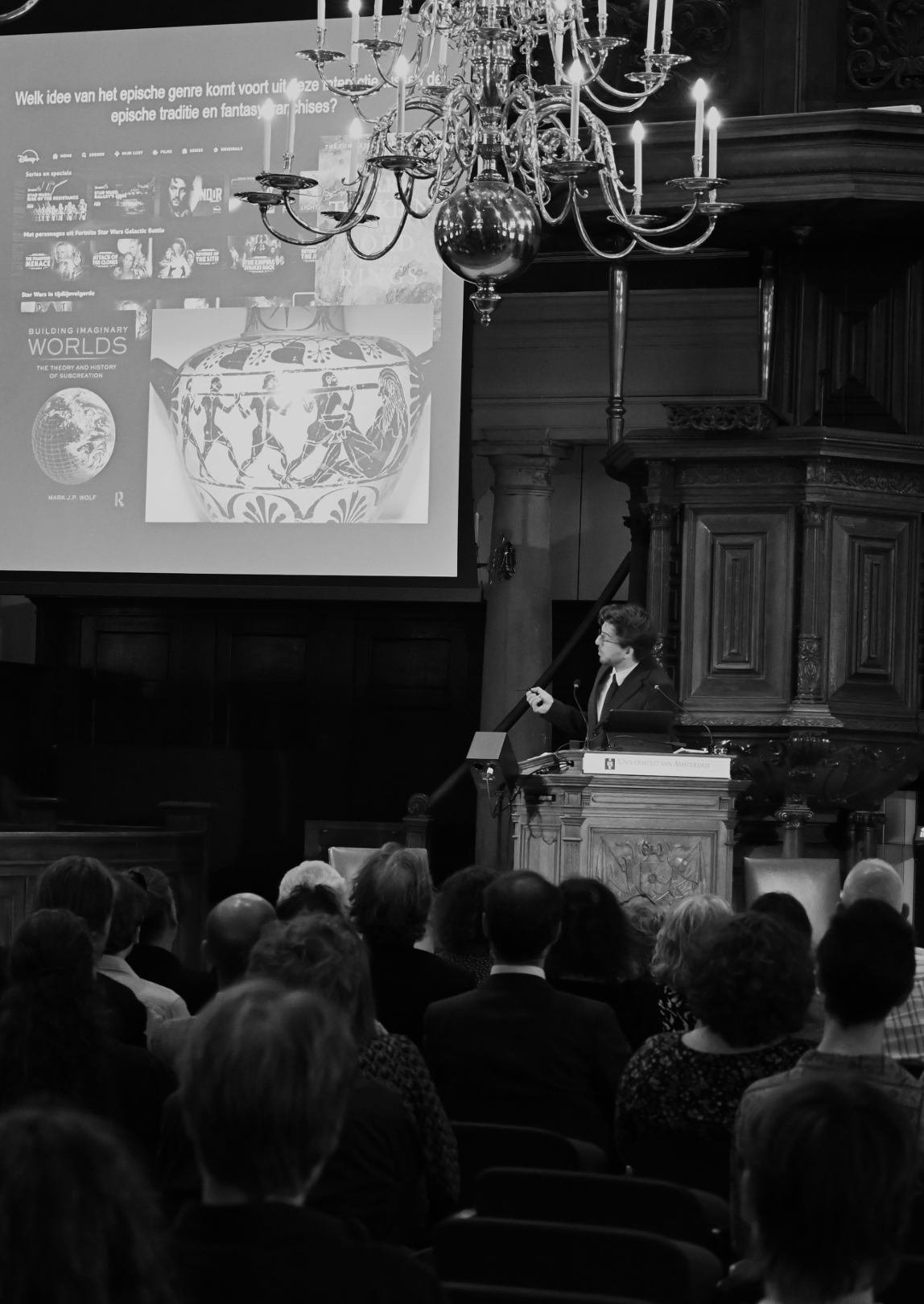
Photo: Martje de Vries
I have long been fascinated by connections between and the present. As a teenager, I was captivated by fantasy and science-fiction stories such as Star Wars, and when I encountered classical literature in secondary school I recognized many of the same themes, narrative patterns, and appeal there. That interest led me to study Classics and Ancient Civilizations. Doing a second BA in Political Science, I became increasingly aware that antiquity plays an important societal and political role as well, as ideas of ‘the classics’ fuel contemporary debates about identity, power, and culture.
All of these interests have influenced my research career, which focusses on the reception of antiquity across time, with particular interests in myth, epic storytelling, popular culture, and political discourse. In my PhD thesis, The Epic Strikes Back (Brill, forthcoming), I examine how ancient epic traditions influence contemporary fantasy franchises, and how these modern receptions in turn reshape our understanding of the classical world.
I am currently a Lecturer in Cultural History at Utrecht University, where I teach courses on ancient history, historiography, and the cultural afterlife of antiquity. I also teach the honours course Thinking Through Mythology at the Institute for Interdisciplinary Studies, which explores the role of myth in contemporary media and society.
Before moving into academia full-time, I worked as a high-school teacher of Latin and Greek and completed a teaching MA at the University of Amsterdam. That experience still shapes my work: research itself is important, but even more important is communicating it beyond the university in a way that is engaging, accessible, and socially relevant.
Through my research, teaching, and public engagement, I aim to show that antiquity still matters. The classical world reaches us through centuries of reinterpretation, and these receptions anchor contemporary ideas about culture, politics, and identity. By looking critically at how antiquity is used and reimagined, we can better understand the world of the past and make more informed choices about what ‘classics’ we want as model for our future.